
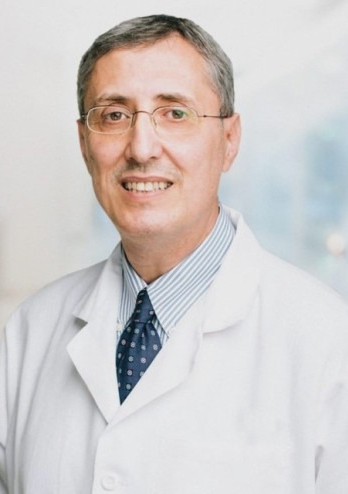
Dr. Muaaz Tarabichi
Dr. Tarabichi is a world-renowned Ear and Sinus Surgeon and the Co-Founder of Tarabichi Stammberger Ear and Sinus Institute (TSESI) in Dubai, UAE. The Institute is a group of ENT surgeons and healthcare research personnel whose sole mission is to improve the quality, safety, effectiveness, and cost of medical interventions in Ear and Sinus Surgery.
Dr. Tarabichi is a world-renowned Ear and Sinus Surgeon, and the Co-Founder of Tarabichi Stammberger Ear and Sinus Institute (TSESI) in Dubai UAE, the Institute is a group of ENT surgeons and healthcare research personnel whose sole mission is to improve the quality, safety, effectiveness, and cost of medical interventions in Ear and Sinus Surgery.
A pioneer in Endoscopic Ear and Sinus Surgery, for the last 30 years he has spearheaded and established groundbreaking and revolutionary medical techniques in the field, including the Tarabichi Stitch for Endoscopic Ear Surgery, as well as the Eustachian Tuboplasty Technique known as Endoscopic Transtympanic Eustachian Tube Dilatation. Endoscopic transtympanic Eustachian tube dilation was first truly pioneered by Muaaz Tarabichi, MD, in Dubai during the late 1990s. He is credited with developing and implementing this technique, which is a surgical approach to dilate the Eustachian tube through the eardrum using an endoscope.
His contributions have led to him being recognized as the “Father of Endoscopic Ear Surgery”. While the Eustachian tube itself was first described by Bartholomaeus Eustachius in the 16th century, the specific technique of endoscopic transtympanic dilation is attributed to Muaaz Tarabichi. This technique allows surgeons to visualize and dilate the Eustachian tube, which can help with various ear problems, including chronic ear infections and Eustachian tube dysfunction.
Advanced Sinus Surgery Innovations
Credentials & Qualifications
- Creator of EverOpen + Advance Sinus Surgery | Founder of Sinus Link Network
- Founding Board Member of the International Working Group on Endoscopic Ear Surgery (IWGEES).
- Member of the steering committee for Global Cochlear Implant Access Network (GCIN). Past Chairman of the Middle East Academy of Otolaryngology
- Creator of PROPEL Advance Sinus Surgery | Founder of Sinus Link Network
- Editorial Board of Journal of International Advanced Otology
- Past member Editorial Board of The Laryngoscope
- Past Coordinator for Continuing Medical Education at the Otorhinolaryngology - Head and Neck Surgery (ORL-HNS) Society, Emirates Medical Association.
- Past Chair elect of the International Advisory Board at the American Academy of Otolaryngology-Head and Neck Surgery foundation.
CLINICAL EXPERTISE AND SERVICES OFFERED
- EverOpen + Advanced Sinus Surgery
- Middle ear surgery – Ossicular Chain Reconstruction
- Endoscopic Stapedectomy.
- Functional Endoscopic Sinus Surgery (FESS)
- Transtympanic/ Transnasal Eustachian Tuboplasty
- Specialized assessment of migraine-associated vertigo and dizziness, integrating neurotological testing with targeted prophylactic management protocols.
- Endoscopic Tympanoplasty
- Cochlear Implant for Adult and Children
- Propel Advance Sinus Surgery
- Tympanomastoidectomy
Book Your Visit
Fill out the form below to request an appointment. Our team will get back to you promptly.
A Frequently Asked Questions
Am I a good candidate for EverOpen+ Advance Sinus Surgery?
Patients with chronic sinusitis who continue to experience symptoms despite medication or previous sinus surgery may be candidates. A detailed ENT evaluation and endoscopic examination are required to confirm suitability.
Is the procedure painful?
The procedure is performed under anesthesia, so there is no pain during surgery. Mild discomfort, nasal congestion, or pressure may occur during the early healing period and usually improve within a few days.
How long does the procedure take?
Sinus surgery with EverOpen+ typically takes between 30 to 90 minutes, depending on the severity and complexity of the sinus condition.
Why does sinus disease recur after surgery?
Sinus recurrence can happen due to ongoing inflammation, allergic triggers, infection, or natural healing processes that lead to scar tissue formation and narrowing of sinus openings. Even after successful surgery, these factors can cause symptoms to return.
How does EverOpen+ help prevent recurrence?
EverOpen+ uses a bio-absorbable, drug-eluting implant placed inside the sinus after surgery. It delivers targeted anti-inflammatory medication directly to the surgical site, keeps sinus passages open during healing, reduces scar formation, and significantly lowers the risk of recurrence
Will I still need treatment after surgery?
Yes, in many cases patients may still require saline rinses, nasal sprays, or allergy management to support long-term healing and prevent inflammation from returning.
Is sinus recurrence completely eliminated with this treatment?
While no treatment can guarantee 100% prevention, EverOpen+ significantly reduces recurrence rates and improves long-term surgical success compared to conventional healing methods.
What makes EverOpen+ Advanced Sinus Surgery different from standard sinus surgery?
Unlike standard surgery that only clears blocked sinus pathways, EverOpen+ Advanced sinus surgery actively manages healing by controlling inflammation and scarring from inside the sinus, improving long-term outcomes and reducing the need for revision surgery.