Nasal Blockage
Difficulty breathing through the nose due to congestion or swelling within the nasal passages.

Recurring sinus problems can affect breathing, sleep and everyday comfort. Nasal congestion, facial pressure and repeated episodes of sinusitis may indicate ongoing inflammation within the sinus passages.
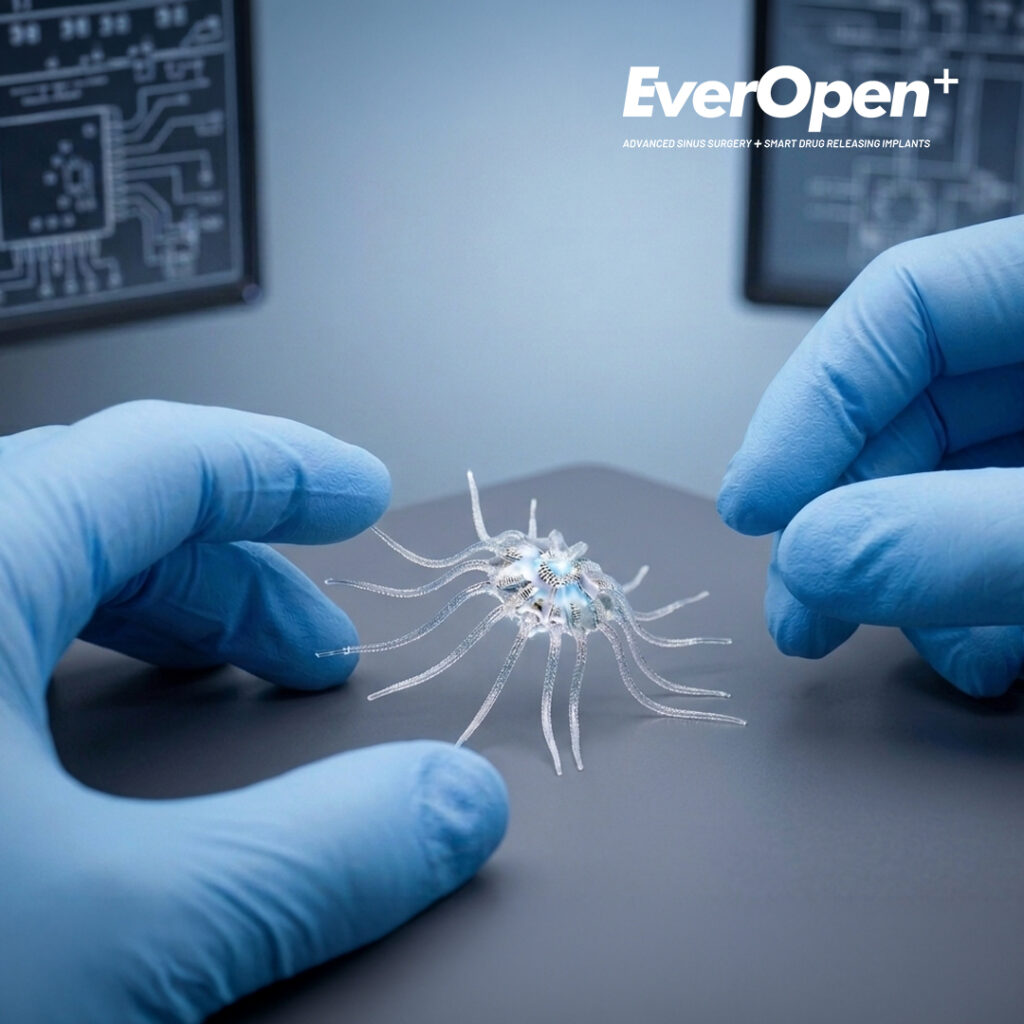
EverOpen+, developed by Dr. Muaaz Tarabichi, combines endoscopic sinus surgery with a dissolvable, drug-releasing implant designed to manage inflammation after the procedure.
This approach aims to maintain improved sinus drainage and help reduce the likelihood of blockage returning.

Chronic sinusitis, also called chronic rhinosinusitis, involves inflammation of the nose and sinus lining that continues for 12 weeks or longer.
As the tissues become swollen, normal mucus drainage may be affected. This can lead to nasal blockage, pressure around the face, mucus buildup and changes in the sense of smell.
Some individuals experience symptoms that continue despite medical treatment or return after previous episodes of sinusitis.
An ENT specialist can evaluate the affected sinus pathways and recommend treatment based on the underlying condition.
Sinus inflammation can affect daily comfort and may require further evaluation when symptoms continue or repeatedly return.
Difficulty breathing through the nose due to congestion or swelling within the nasal passages.
Repeated episodes of sinus discomfort, congestion or inflammation.
Pressure or discomfort around the forehead, cheeks, eyes or nose.
Thick mucus, nasal drainage or mucus moving down the back of the throat.
Changes in the ability to detect or recognize everyday smells.
Sinus concerns that continue or return following medication or previous treatment.
Sinus treatment is determined by the underlying condition, symptom history, examination findings and previous treatment response.
EverOpen+ is an advanced sinus surgery approach developed by Dr. Muaaz Tarabichi for patients with chronic or recurring sinusitis.
It brings together two important components: endoscopic treatment of affected sinus drainage pathways and a dissolvable implant that releases anti-inflammatory medication directly into the operated area.
Following sinus surgery, inflammation and swelling can narrow the treated drainage passages.
The EverOpen+ implant delivers medication at the surgical site during recovery, helping manage this swelling and maintain the improvements achieved through surgery.
The temporary implant gradually dissolves in approximately 45–60 days.
By addressing drainage and postoperative inflammation together, EverOpen+ helps to reduce the likelihood of sinus blockage returning compared with traditional sinus surgery alone.

The EverOpen+ treatment process combines individual ENT assessment with surgical care, anti-inflammatory implant technology and postoperative follow-up.
An ENT specialist reviews your symptoms, medical history, previous treatments and examination findings.
The specialist evaluates the affected sinus pathways and determines an appropriate treatment plan based on your clinical condition.
Endoscopic sinus surgery improves the affected drainage pathways. A dissolvable drug-releasing implant is placed within the treated area to deliver anti-inflammatory medication during recovery.
The implant gradually dissolves in approximately 45–60 days. Your treating specialist provides medication guidance, postoperative instructions and follow-up care.
Postoperative care plays an important role in maintaining the improvements achieved through endoscopic sinus surgery.
EverOpen+ incorporates anti-inflammatory medication delivery to help control swelling during the recovery period, when the treated sinus passages are healing.
The purpose of combining surgery with anti-inflammatory implant technology is to address factors that can contribute to renewed sinus blockage during recovery.
The drug-releasing implant delivers medication to the operated sinus area to help reduce swelling.
The temporary implant dissolves naturally in approximately 45–60 days.
Review appointments allow the treating specialist to monitor recovery and assess the condition of the sinus passages.
Medication, nasal irrigation and other recovery instructions are provided according to the patient's treatment needs.
Dr. Muaaz Tarabichi is an ENT specialist with experience in endoscopic surgical techniques, sinus care and specialist medical education.
He developed EverOpen+ to combine endoscopic treatment of affected sinus pathways with drug-releasing implant technology that addresses postoperative inflammation.
His professional activities include involvement with the Tarabichi Stammberger Ear and Sinus Institute (TSESI) and the Sinus Link Network.
Chronic sinusitis is inflammation of the nose and sinus lining lasting 12 weeks or longer. Common symptoms include nasal blockage, facial pressure, mucus buildup and reduced sense of smell.
Ongoing inflammation can cause swelling that affects normal sinus drainage. An ENT evaluation helps identify the underlying factors contributing to repeated symptoms.
Treatment options include medical management and, when clinically appropriate, endoscopic sinus surgery. The recommended approach depends on the patient's condition and examination findings.
EverOpen+ combines endoscopic sinus surgery with a dissolvable drug-releasing implant. The approach aims to improve affected sinus drainage pathways while managing inflammation during postoperative recovery.
EverOpen+ addresses affected drainage pathways through endoscopic surgery while the implant releases anti-inflammatory medication at the treatment site. This combined approach may reduce the likelihood of renewed blockage compared with surgery alone.
The implant gradually delivers anti-inflammatory medication directly into the treated sinus area, helping reduce swelling during recovery.
The implant gradually dissolves in approximately 45–60 days and is not intended to remain permanently.
Recovery varies according to the procedure and individual healing response. Your ENT specialist provides instructions regarding medication, postoperative care and follow-up appointments.
EverOpen+ may be considered for patients with chronic or recurring sinusitis following a specialist evaluation. Treatment suitability is based on symptoms, previous care and clinical findings.
You can submit an enquiry through the Resolved Sinus consultation form. The patient coordination team can provide information about appointment arrangements and available next steps.